Anodising & Powder Coating
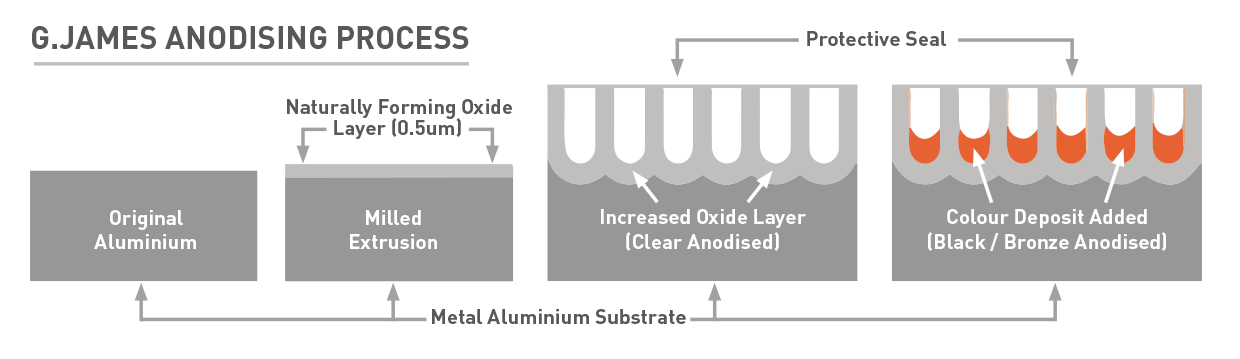
The exposed surface area of aluminium extrusion is inherently protected by a naturally occurring, transparent layer of aluminium oxide. This barrier layer forms immediately the newly extruded aluminium is exposed to oxygen and is referred to as 'mill' finish. In many instances, this finish may not be suitable for the product's final application. Where additional surface protection and/or colour is required, G.James offers both anodised and powder coated finishing as part of our complete service package.
Anodising

Anodising is electrochemical ‘conversion’ process that enhances the metallic lustre of aluminium and thickens the surface layer of aluminium oxide. This controlled oxidisation forms a much harder, more corrosion resistant surface finish. For additional protection, G.James implements a ‘hot-seal’ application to the final stages of anodising to prevent any possibility of fading or cracking. See diagram below.

We offer clear anodised and the full-colour spectrum from light bronze through to black, in thicknesses ranging from AA10 micron, up to AA25 micron. Upon request, G.James can also apply a ‘media blast’ process that produces a highly uniform, blemish-free, matte finish.
 

Anodising Benefits:
 

  • Best finish for resisting corrosion in coastal and high salt environments
  • Exhibits subtle change in appearance in different light & angles
  • Is an integral finish with a high level of colour fastness and surface durability (for resistance against UV degradation, abrasion and heat)
  • Does not outgas or deposit stains on the glass when used in high temperature and/or shadow box applications
  • Optimal surface coverage
  • No risk of adhesion failure
     

Anodising Characteristics:
 

  • Finishes are subject to colour variation due to differing alloy compositions within the extrusion
  • Extrusion die lines can be visible particularly on wider surfaces. These lines can be eliminated prior to anodising with G.James’ media blast process
  • While durable & hard to scratch when damage occurs it is difficult to repair
anodising
anodising
Anodising-diagram
Powdercoating
Powder Coating

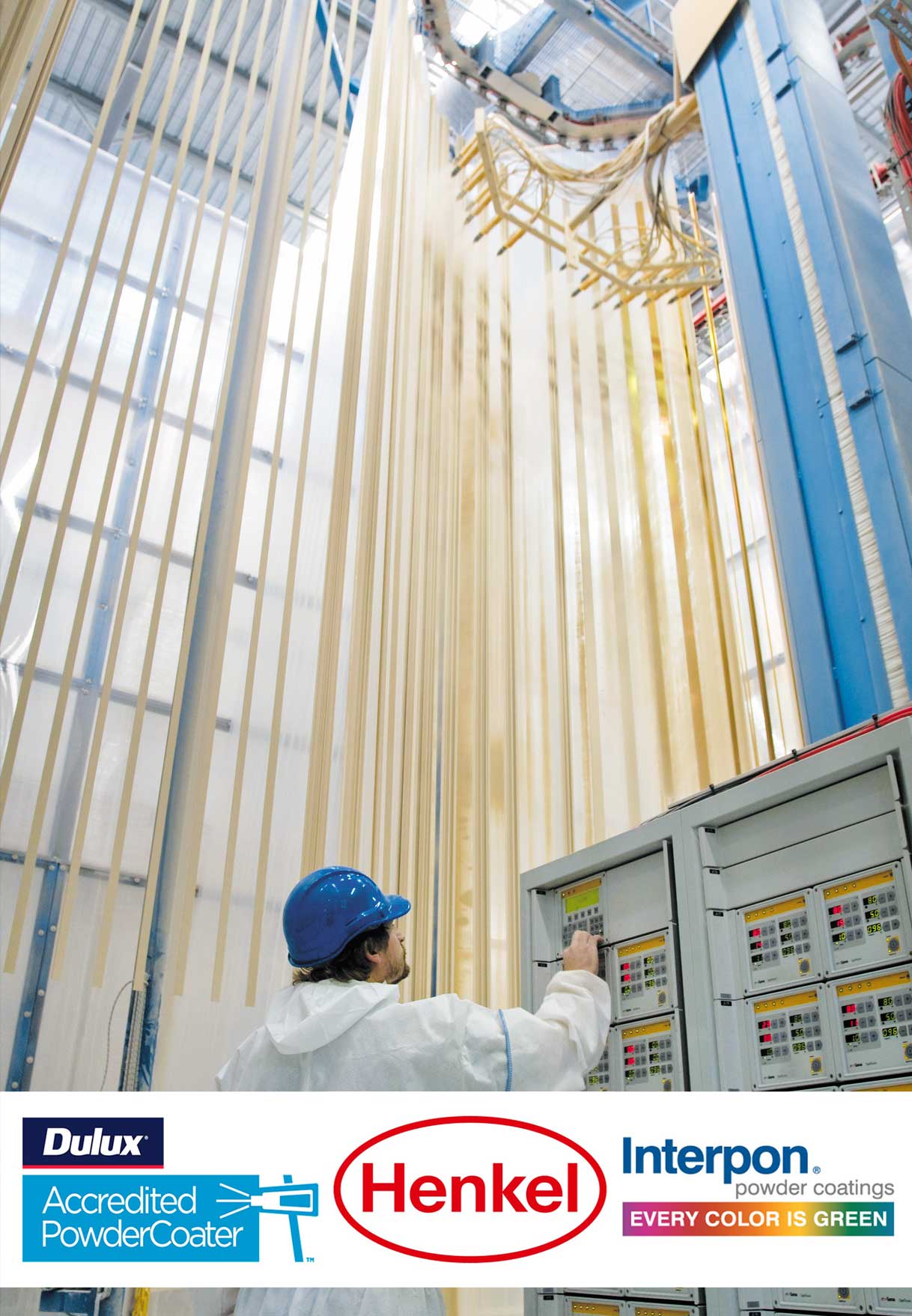
Powder coating is an electrostatic process where fine paint particles are sprayed onto the surface of pre-treated aluminium. In a similar way that iron filings attract to a magnet, the coloured powder adheres to the aluminium coating surface due to the electrostatic effect. Once the powder is applied, the aluminium is then baked in an oven to achieve a highly durable, painted finish.

G.James undertakes an extensive, chromate conversion pre-treatment process prior to the application of the powder ensuring an improved level of corrosion resistance for the base aluminium surface.

G.James is a Dulux and Akzo Nobel approved applicator offering a selection of standard and high durability grade powders in an extensive range of colours, gloss levels and metallic shades.

We are also a licensed applicator of the Effecta process which replicates the colour and appearance of timber grain onto flat-faced aluminium profiles.
 

Powder Coating Benefits & Characteristics:
 

  • Extensive colour range
  • Excludes extrusion die lines
  • Small scratch marks can be repaired (touch-up process)
  • Powder coating is an efficient and economical process

Surface Finishing Comparison Table


Property Anodising Polyester Powder Extra High Durability Powder PVF3 Powder
Composition Electrochemical Process Polyester Polyester Fluoropolymer
Colour Range Clear, Black & Bronzes As per suppliers colour card Limited range in stock/made to order Limited range in stock/made to order
Gloss Range 20 – 90 10 – 90 10 – 90 25 – 70
Scuff Resistance ¹ Excellent Good Good Very Good
Impact Resistance N/A Good Good Good
Pollution Resistance Very Good Good Very Good Excellent
Flexibility ² Fair Good Good ³ Good ³
Years to First Chalk 10 – 15 years 3 – 5 years ⁴ 8 - 10 years 10 - 15 years
Mortar Stain ⁵ Yes Possible Possible Possible
Guide to Service Life 15 – 20 years 10 years 15 – 20 years 20+ years
Dry Film Build (Microns) 10, 15, 20 & 25 60 – 80 60 – 80 50 – 80
Pretreatment Caustic etch or polish Chromate Chromate Chromate
Primer No No No No
Touch Up No Yes Yes Yes
Applied Cost Moderate/High Moderate High Very High
Specification AS 1231 AS 3715 &
AAMA 2603
AS 3715 &
AAMA 2604
AS 3715 &
AAMA 2605
Warranty Term 7 – 10 years 7 No 10 year on request 8 10 year on request 8

Notes: ¹ Resistance to minor damage during transport (rubbing) and general handling/processing, excluding scratches. The grading detailed is a guide only as the level of scuff resistance is dependent on the shade of the colour selected. Generally, the darker the colour, to greater the potential for scuffing. ² Suitability for folding and rolling post-finishing, particularly relevant for aluminium sheet for flashings etc. ³ Electro and Precious colours are not recommended if post finish fabrication (eg. rolling, folding, bending etc.) is required. ⁴ For bright colours (ie. those with high levels of colour pigment) this time is likely to be less. Compliance with the G.James Care & Maintenance Instructions is recommended to reduce the likelihood of chalking. ⁵ Will stain if long-term exposure occurs. Remove and clean any mortar on aluminium surfaces as soon as it is noticed. Refer to the G.James Care & Maintenance Instructions leaflet. ⁶ Standards and specifications quoted are relevant at the time of print. 7 Warranty term is dependent on the micron level supplied, Building Class and site location. Warranties exceeding 10 years will be considered on application. 8Warranties exceeding these terms, as promoted by Dulux and Interpon (being Suppliers), are issued from the supplier to G.James (being the Applicator) and as such the terms and conditions are not relevant or transferable to the customer. A copy of the Supplier’s warranty (to G.James) is available upon request for the purposes of confirming the application of the powder specified and in no way transfers an extended warranty term to the customer.