Anodising
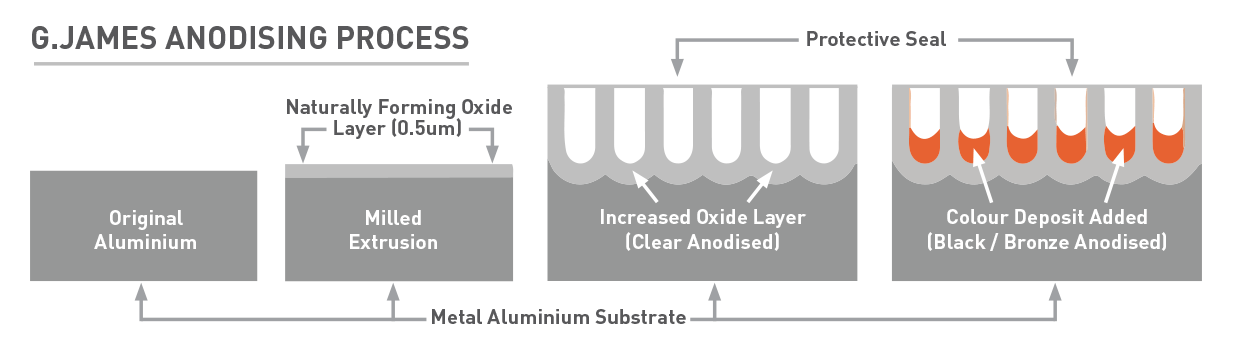
Anodising is electrochemical ‘conversion’ process that enhances the metallic lustre of aluminium and thickens the surface layer of aluminium oxide. This controlled oxidisation forms a much harder, more corrosion resistant surface finish. For additional protection, G.James implements a ‘hot-seal’ application to the final stages of anodising to prevent any possibility of fading or cracking. See diagram below.
We offer clear anodised and the full-colour spectrum from light bronze through to black, in thicknesses ranging from AA10 micron, up to AA25 micron. Upon request, G.James can also apply a ‘media blast’ process that produces a highly uniform, blemish-free, matte finish.
Anodising Benefits:
- Best finish for resisting corrosion in coastal and high salt environments
- Exhibits subtle change in appearance in different light & angles
- Is an integral finish with a high level of colour fastness and surface durability (for resistance against UV degradation, abrasion and heat)
- Does not outgas or deposit stains on the glass when used in high temperature and/or shadow box applications
- Optimal surface coverage
- No risk of adhesion failure
Anodising Characteristics:
- Finishes are subject to colour variation due to differing alloy compositions within the extrusion
- Extrusion die lines can be visible particularly on wider surfaces. These lines can be eliminated prior to anodising with G.James’ media blast process
- While durable & hard to scratch when damage occurs it is difficult to repair